High Protein Diet for Weight Loss: How It Works and How to Start
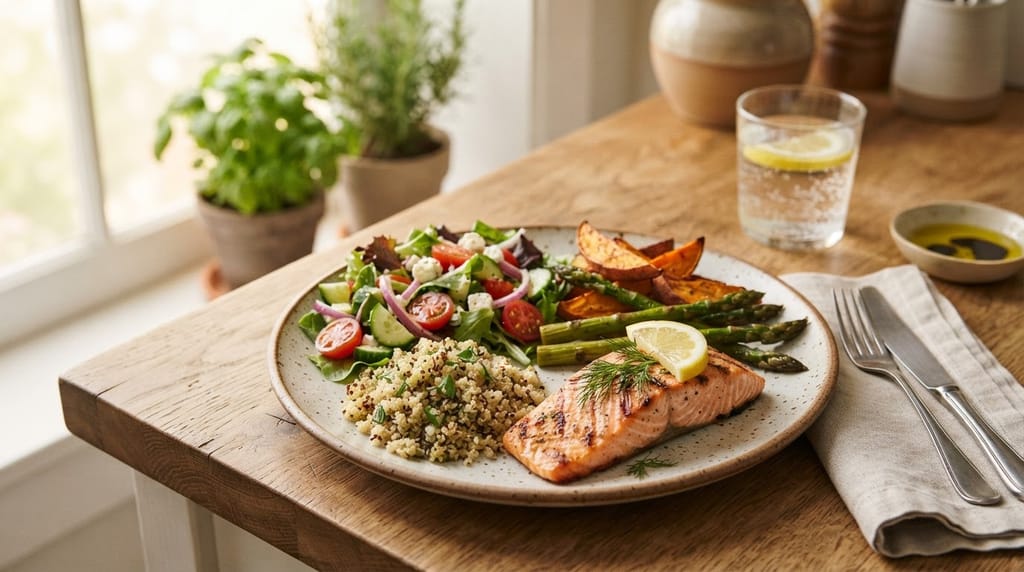
A high protein diet keeps you full, burns more calories in digestion and protects muscle. Aim for 1.6 to 2.2 grams of protein per kilogram of body weight.
What is a high protein diet?
There is no single official definition, but in practice a high protein diet gives you about 25 to 35 percent of your calories from protein, or 1.6 to 2.2 grams of protein per kilogram of body weight each day. For comparison, the minimum recommended amount to avoid deficiency for a healthy adult is only about 0.8 grams per kilogram. That minimum is designed to prevent deficiency, not to optimise body composition, which is why people who exercise or who are trying to lose fat often aim higher.
Why does protein help with weight loss?
1. It keeps you full for longer
Protein is the most filling nutrient. It increases hormones that signal fullness, such as GLP 1 and PYY, and lowers the hunger hormone ghrelin. Meals with more protein tend to hold off hunger for longer, which makes sticking to a calorie deficit easier.
2. It burns more calories to digest
Your body uses energy to digest and process food, which is called the thermic effect of food. Protein has the highest thermic effect, about 20 to 30 percent of its calories, compared with 5 to 10 percent for carbohydrate and 0 to 3 percent for fat. So 100 calories of protein leaves you with roughly 70 to 80 usable calories, versus 90 to 95 from carbohydrate and 97 or more from fat.
3. It protects your muscle
When you eat fewer calories than you burn, your body may break down muscle as well as fat. Higher protein, together with resistance training, helps preserve lean mass so more of the weight you lose is fat. Keeping muscle protects your metabolism and your shape. A review of studies by Morton and colleagues found that protein intake up to about 1.6 grams per kilogram helps strength training adults build and keep muscle, with possible extra benefit up to around 2.2 grams.
4. It helps control cravings
Many people find that a high protein breakfast reduces cravings for sweets later in the day. It may also reduce late night snacking.
How much protein do you need?
- Start with 1.6 grams per kilogram of your body weight. For an 80 kilogram person that is 128 grams a day.
- Go up to 2.0 to 2.2 grams per kilogram if you are lean, training hard, in a larger deficit or aged over 50.
- Spread it out. Aim for 25 to 40 grams per meal across three or four meals. A review by Schoenfeld and Aragon suggests about 0.4 grams per kilogram per meal is a sensible target.
If you carry a lot of excess weight, use a body weight closer to your goal weight to calculate your target, so you do not overshoot. Women have the same needs per kilogram. Read protein intake for women for fat loss and how much protein athletes really need.
Best high protein foods
These approximate values refer to cooked weight unless stated.
- Chicken or turkey breast: about 30 grams of protein per 100 grams.
- Lean beef: about 26 to 30 grams per 100 grams.
- Fish (tuna, salmon, cod): about 20 to 26 grams per 100 grams.
- Shrimp: about 24 grams per 100 grams.
- Eggs: about 6 grams each.
- Greek yogurt: about 9 to 10 grams per 100 grams.
- Cottage cheese: about 11 to 12 grams per 100 grams.
- Lentils and chickpeas: about 8 to 9 grams per 100 grams.
- Tofu: about 8 to 15 grams per 100 grams, depending on firmness.
- Whey or plant protein powder: about 20 to 25 grams per scoop.
For the complete list see high protein foods and how much protein they contain.
A sample high protein day (about 1,800 calories)
- Breakfast: three eggs and a bowl of Greek yogurt with berries, about 30 grams of protein.
- Lunch: 150 grams of grilled chicken breast with rice and vegetables, about 45 grams.
- Snack: cottage cheese with cucumber or fruit, about 17 grams.
- Dinner: 150 grams of baked fish with a big salad and potatoes, about 35 grams.
- Evening: a whey shake or yogurt, about 25 grams.
That reaches around 150 grams of protein. You can build a similar day from the Sports Kitchen, which lists complete nutrition for each dish:
- Vietnamese chicken and cabbage salad, about 409 calories and 61 grams of protein.
- Russian chicken and vegetable soup, about 433 calories and 59 grams of protein.
- Moroccan fish tagine with vegetables, about 216 calories and 36 grams of protein.
For breakfast ideas, see high protein breakfast ideas. For dinners, read healthy dinner ideas for weight loss under 500 calories.
A high protein diet is still a calorie deficit
Protein helps, but it does not override energy balance. If you eat more calories than you burn, you will not lose fat, even on a high protein diet. First work out your calories. Read how to calculate your daily calorie needs and how to calculate your macros for weight loss. Then fill your calories with a protein first mindset:
- Build every meal around a protein source.
- Add vegetables and fibre rich carbohydrates.
- Use fats, such as olive oil, in measured amounts.
- Fit in a treat now and then.
Is a high protein diet safe?
For healthy people, yes. A systematic review by Devries and colleagues found no harm to kidney function in healthy adults who eat more protein. However:
- People with kidney disease must follow their doctor's advice about protein.
- People with certain liver or metabolic conditions should check with their doctor.
- Drink enough water, as a higher protein intake slightly raises your need for fluids.
- Do not neglect fibre. If you replace carbohydrates with only meat, you may get constipated. Keep vegetables, fruit, legumes and whole grains in your plan.
- Choose a variety of sources. Fish, poultry, dairy, eggs, legumes and some red meat give different nutrients.
Plant based high protein options
If you eat little or no meat, you can still reach a high protein intake with tofu, tempeh, lentils, chickpeas, edamame, Greek yogurt, eggs and soy or pea protein. Read vegan diet for weight loss and muscle for a full plan. A mix of different plant proteins gives a good amino acid profile.
Common mistakes
- Relying on bars and shakes. They are convenient but expensive, and many are high in sugar. See are protein bars a real meal replacement.
- Eating protein but ignoring total calories. Check your numbers.
- Eating all your protein at dinner. Spread it through the day.
- Dropping carbohydrates completely. You need carbohydrates for training and for energy. Read carbs and athletic performance.
- Skipping strength training. Lifting weights is what tells your body to keep muscle.
- Judging by the scale alone. Track waist, photos and strength too. Read how to track weight loss progress beyond the scale.
Simple tips to eat more protein
- Add an egg or yogurt to breakfast.
- Choose a protein source before choosing sides.
- Keep cooked chicken, boiled eggs and canned tuna ready.
- Swap sugary snacks for yogurt, cottage cheese or nuts.
- Use a protein shake only to fill a gap.
- Prepare meals in advance. Read meal prep for busy athletes.
Frequently asked questions
How much weight can I lose with a high protein diet? A realistic rate is 0.5 to 1 kilogram a week with a calorie deficit.
Will a high protein diet make me bulky? No. Building significant muscle needs a calorie surplus and years of heavy training.
Can I eat high protein on a budget? Yes. Eggs, lentils, chickpeas, canned tuna, chicken thighs and yogurt are affordable. Read budget friendly sports nutrition.
Do I need protein powder? Not necessarily. It is a convenience, not a requirement.
Is a high protein diet good for older adults? Often yes, since muscle is harder to maintain with age. Speak with a doctor if you have kidney problems.
This article is general information and not medical advice. If you have a medical condition, speak with your doctor or a registered dietitian before changing your diet.
How FiTPLATE builds your high protein plan
A high protein diet works when the numbers are right. FiTPLATE does the maths for you.
- Your target, calculated. Tell FiTPLATE your body, goal and activity level and it sets your daily calories and protein.
- A daily log that shows protein as you eat. Search foods, scan barcodes or use quick add and see where you stand.
- Meals that fit your target. Take a photo of your fridge, set a protein goal and let FiTPLATE build a meal, or browse hundreds of recipes in the Sports Kitchen.
- A weekly planner and shopping list to plan high protein meals across the week.
- Progress tracking. Log your weight and get a weekly suggestion if your target needs adjusting.
Start your free trial and set your protein target
References
- Morton RW et al. A systematic review, meta analysis and meta regression of the effect of protein supplementation on resistance training induced gains in muscle mass and strength in healthy adults. British Journal of Sports Medicine, 2018.
- Schoenfeld BJ, Aragon AA. How much protein can the body use in a single meal for muscle building? Journal of the International Society of Sports Nutrition, 2018.
- Devries MC et al. Changes in kidney function do not differ between healthy adults consuming higher versus lower protein diets: a systematic review and meta analysis. Journal of Nutrition, 2018.