Meal Prep for Busy Athletes
Why Meal Prep Matters for Athletes
A packed schedule of training, work, and daily life often pushes good nutrition to the bottom of the priority list. The problem is that athletic performance and recovery depend directly on consistent energy, protein, and carbohydrate intake throughout the day — not on one "perfect" meal. Meal prep is a practical tool that reduces reliance on last-minute decisions and fast food, ensuring key nutrients arrive at the right time around training.
Core Nutritional Principles to Keep in Mind
When planning meals, focus on the following elements rather than obsessing over counting every calorie:
- Protein: Spreading intake across 3-4 servings a day (roughly 20-40 grams per serving depending on body size) supports muscle repair and growth, a finding well supported by current exercise physiology research.
- Carbohydrates: These are the primary fuel for moderate-to-high intensity exercise; it's best to include a complex carbohydrate source (rice, oats, potatoes, legumes) in most meals.
- Healthy fats: Olive oil, nuts, and avocado support overall health, but it's better to reduce them in meals eaten very close to training to ease digestion.
- Vegetables and fruits: These provide vitamins, minerals, and antioxidants that support overall recovery.
Practical Steps for Effective Meal Prep
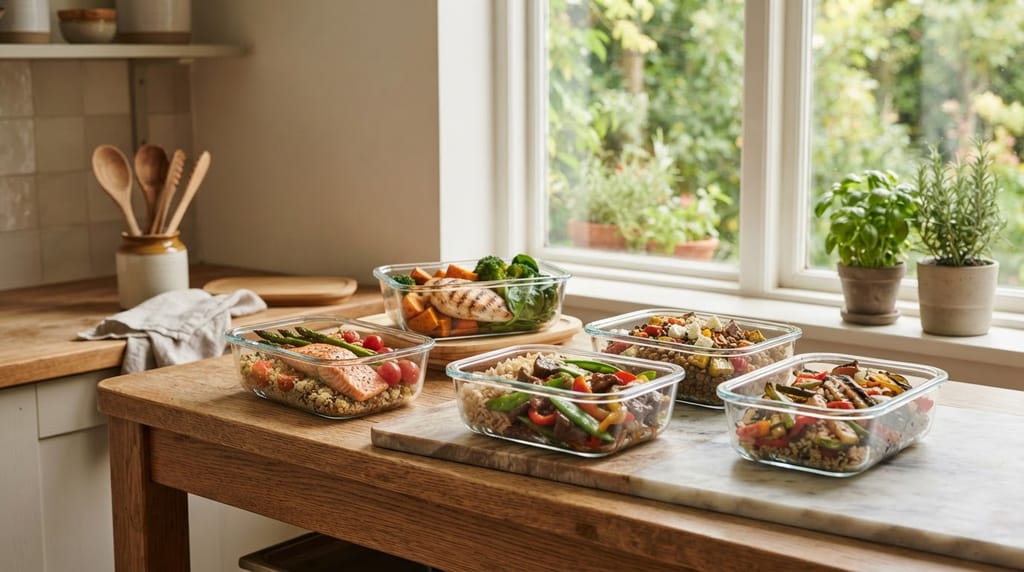
- Pick one prep day per week: Two to three hours is usually enough to cook batches of protein (chicken, meat, fish, tofu) and carbohydrate sources at once.
- Use divided containers: This makes it easier to control the relative portions of protein, carbs, and vegetables without needing a scale every time.
- Prepare quick snacks: Nuts, yogurt, fruit, or protein sandwiches that are easy to carry are useful when time is tight between training and other commitments.
- Time meals around training: A meal containing carbohydrates and protein two to three hours before training, and a similar one one to two hours after, supports performance and recovery according to accumulated evidence in this field.
- Store and freeze safely: Cooked meals can be frozen for up to 2-3 months, while refrigerated meals should only be kept for 3-4 days to maintain food safety.
An Important Note on Supplements and Special Cases
This article provides general educational information on sports nutrition and is not intended to replace advice from a doctor or licensed dietitian. If you have a health condition (such as kidney disease, diabetes, or an eating disorder), or are considering supplements, you should consult a specialist before adjusting your diet or training plan.
Conclusion
Meal prep is not just a time-saver — it's a nutritional strategy that ensures consistency and regularity, which are among the most important factors for long-term success in sports nutrition, far more valuable than any short-term "magic" dietary fix.