High Protein Foods List: The Best Sources and How Much Protein They Contain
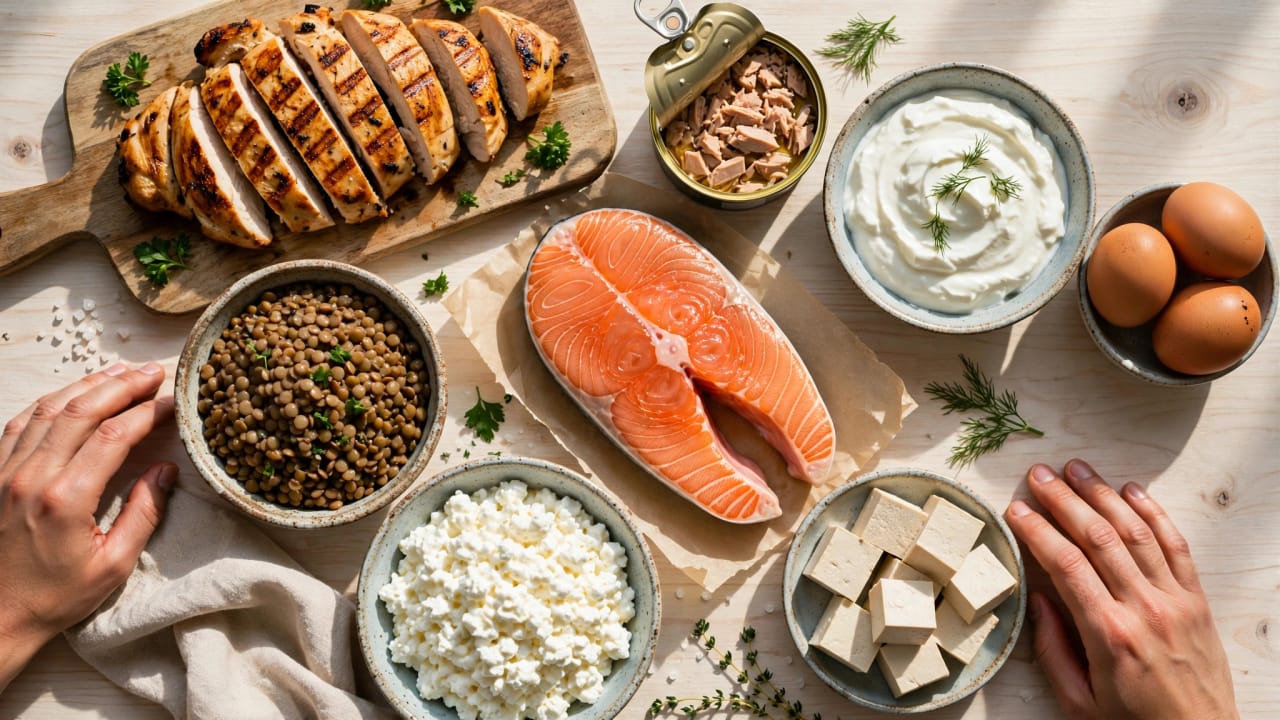
How much protein do you actually need?
The official minimum for an average adult is 0.8 grams per kilogram of body weight per day. That number prevents deficiency, but it is not necessarily the best amount if you exercise or are trying to lose fat. Research on active people and people in a calorie deficit generally supports 1.6 to 2.2 grams per kilogram. For someone weighing 70 kg, that is about 110 to 155 grams a day.
Spreading it over three or four meals, with roughly 25 to 40 grams each, tends to work well for fullness and muscle maintenance.
People with kidney disease should follow their doctor's advice on protein.
Animal sources
Values below are per 100 grams cooked unless stated, and are approximate.
- Chicken breast: about 31 grams.
- Turkey breast: about 29 grams.
- Lean beef: about 26 grams.
- Salmon: about 22 to 25 grams, plus omega 3 fats.
- Tuna in water, drained: about 24 to 26 grams.
- Shrimp: about 24 grams, very low in fat.
- White fish such as cod: about 20 to 23 grams.
- Eggs: about 12 to 13 grams per 100 grams, or roughly 6 grams per large egg.
- Plain Greek yoghurt, low fat: about 10 grams.
- Cottage cheese: about 11 grams.
- Skyr: about 11 grams.
- Whey protein powder: about 20 to 25 grams per scoop.
Plant sources
- Lentils, cooked: about 9 grams, with plenty of fibre.
- Chickpeas, cooked: about 8 to 9 grams.
- Black or kidney beans, cooked: about 8 to 9 grams.
- Firm tofu: about 12 grams.
- Tempeh: about 19 grams.
- Edamame: about 11 grams.
- Peanuts: about 25 grams per 100 grams, but also very high in calories.
- Almonds: about 21 grams per 100 grams, with a lot of fat.
- Quinoa, cooked: about 4 grams, a modest source but a complete protein.
- Seitan: about 20 to 25 grams, though it contains gluten.
Protein per calorie matters
If your goal is to lose weight, look at how much protein you get for the calories. Chicken breast, white fish, shrimp, egg whites, tuna, low fat Greek yoghurt and cottage cheese are very efficient. Nuts, cheese and fatty cuts of meat are tasty but carry many more calories per gram of protein.
Simple ways to raise your protein
- Build every meal around a protein first, then add carbs and vegetables.
- Swap a snack of biscuits for yoghurt, eggs or a handful of edamame.
- Add lentils or chickpeas to soups and salads.
- Have a high protein breakfast, such as eggs, labneh or Greek yoghurt with oats.
- Use a protein shake only when whole food is not practical. It is a convenience, not a requirement.
Vegetarian and vegan tips
You can meet your needs on a plant based diet by combining sources: legumes, tofu, tempeh, grains, nuts and seeds across the day. Eating a variety makes sure you get all the essential amino acids.
Myths worth dropping
- You do not need to eat protein within thirty minutes of a workout. Total daily intake matters far more.
- More is not always better. Beyond roughly 2.2 grams per kilogram, there is little extra benefit for most people.
- High protein diets do not harm healthy kidneys in the research that exists, but anyone with a kidney condition should check with a doctor.
Use this list as a guide and check your own food labels, since brands and cooking methods vary.
A day of high protein eating
Here is an example for roughly 120 grams of protein. Adjust the portions to your own target.
- Breakfast: Three eggs and a slice of whole grain toast. About 22 grams.
- Snack: A tub of plain Greek yoghurt. About 17 grams.
- Lunch: 150 grams of cooked chicken breast with rice and salad. About 47 grams.
- Snack: A boiled egg and a handful of edamame. About 17 grams.
- Dinner: 120 grams of cooked salmon with vegetables and potatoes. About 28 grams.
That reaches around 130 grams without any supplements.
Protein quality and complete proteins
Proteins are made of amino acids, and nine of them are essential, meaning you must get them from food. Animal proteins such as meat, fish, eggs and dairy contain all nine in good amounts. Many plant proteins are lower in one or two amino acids, but eating a variety across the day, for example rice and beans, or hummus and bread, gives you a complete profile. Soy, quinoa and buckwheat are plant foods that are close to complete on their own.
Do you need a protein supplement?
Most people can reach their targets with food alone. Protein powder is simply a convenient, fast way to add 20 to 25 grams when it is hard to cook. It is useful after a workout when you are in a hurry, or for people with a small appetite. Choose a product that has been tested by a third party, and check the label for added sugar.
Protein for different goals
- Fat loss: 1.6 to 2.2 grams per kilogram helps preserve muscle and keep you full.
- Muscle gain: 1.6 to 2 grams per kilogram is usually enough when combined with strength training.
- General health: At least 0.8 grams per kilogram, and often a bit more for older adults to maintain muscle.
- Older adults: Many experts suggest 1.0 to 1.2 grams per kilogram or more, with strength training, to fight muscle loss.
Budget friendly protein
Protein does not have to be expensive.
- Eggs, lentils, chickpeas and beans are among the cheapest sources.
- Tinned tuna and sardines are inexpensive and shelf stable.
- Chicken thighs and whole chickens often cost less per gram of protein than breast.
- Plain yoghurt and cottage cheese are good value, especially in larger tubs.
- Frozen fish and shrimp are often cheaper than fresh.
Frequently asked questions
Can too much protein damage my kidneys? In healthy people, the research does not show kidney damage at the intakes discussed here. People with existing kidney disease should follow their doctor's advice.
Is it better to eat protein at every meal? Spreading it across meals generally works well for muscle and fullness, but total daily protein matters most.
Do I need extra protein if I am vegetarian? You may need to be a little more deliberate about variety, but you can meet your needs with legumes, soy, dairy, eggs, nuts and grains.
Does protein make women bulky? No. Building a lot of muscle takes years of hard training and plenty of calories. Protein simply helps you recover and stay full.
What are the best protein sources for weight loss? Chicken breast, white fish, shrimp, egg whites, tuna, low fat Greek yoghurt, cottage cheese, lentils and tofu give a lot of protein per calorie.
Use the list as a guide, check your own labels, and build meals around protein first. That one habit makes a big difference to hunger and body composition over time.
Key takeaways
- Most active adults do well with 1.6 to 2.2 grams of protein per kilogram of body weight.
- Choose protein sources that give you the most protein for the calories, especially when losing weight.
- Food first, supplements only when they make life easier.