Calorie Deficit Meal Plan: A Simple 7 Day Template You Can Copy
Start with the numbers, not the menu
A calorie deficit plan only works if the targets fit you. The example below is built around 1,800 calories and about 130 grams of protein, which suits many moderately active adults who want to lose weight at a steady pace. If your needs are different, scale the portions up or down.
To find your own numbers, estimate your daily calorie needs, subtract roughly 400 to 500, and aim for 1.6 to 2 grams of protein per kilogram of body weight. Do not go below about 1,200 calories for women or 1,500 for men without medical supervision.
The daily template
The easiest way to stay consistent is to repeat a structure, not invent seven new menus.
Breakfast, about 350 calories. Three eggs scrambled with tomato and one slice of whole grain toast. About 22 grams of protein.
Snack, about 150 calories. A small tub of plain Greek yogurt with a few berries. About 17 grams of protein.
Lunch, about 550 calories. Roughly 150 grams of cooked chicken breast, 150 grams of cooked rice, and a big salad dressed with a teaspoon of olive oil. About 50 grams of protein.
Snack, about 200 calories. One apple and a small handful of almonds.
Dinner, about 550 calories. About 150 grams of cooked salmon, roasted vegetables and a medium boiled potato. About 36 grams of protein.
Total: close to 1,800 calories and 125 to 130 grams of protein.
Swap, do not reinvent
To keep the week interesting, rotate one item at a time and keep the calories similar:
- Protein at lunch or dinner: chicken breast, lean beef, turkey, white fish, shrimp, tuna, tofu or lentils.
- Carbs: rice, potatoes, pasta, bulgur, quinoa, whole grain bread.
- Vegetables: whatever is in season and on offer. Aim for at least two portions at lunch and dinner.
- Breakfast alternatives: oats cooked with milk and a spoon of nut butter, or labneh with cucumber and whole grain bread.
A sample week at a glance
- Monday: Eggs and toast, chicken and rice, salmon and potato.
- Tuesday: Oats, tuna salad with bread, lean beef kofta with bulgur and salad.
- Wednesday: Eggs and toast, lentil soup with a side salad, baked chicken with roasted vegetables.
- Thursday: Greek yogurt bowl with fruit, shrimp and rice, turkey with sweet potato.
- Friday: Eggs and toast, chicken wrap with lots of vegetables, grilled fish with potatoes.
- Saturday: Oats, chickpea and tuna salad, a flexible meal you enjoy within your calorie range.
- Sunday: Labneh and bread, roast chicken with vegetables, a light leftover based dinner.
Habits that make it work
- Cook two proteins and two carbs on Sunday and mix them through the week.
- Weigh food raw or cooked consistently, and do not switch between the two.
- Keep oil, nuts, cheese and sauces measured, since they carry the most hidden calories.
- Drink water before meals and keep sugary drinks out of the plan.
- Leave a little room each day for something you actually enjoy, so the plan survives the weekend.
How to know if it is working
Weigh yourself a few times a week and look at the weekly average. If you are losing 0.5 to 1 percent of your body weight per week, stay the course. If nothing has moved after three weeks, reduce portions slightly or add more walking before cutting anything drastic.
This template is general information, not medical advice. If you have a health condition or take medication, check with a professional first.
How to adjust the plan to your own calories
The 1,800 calorie template is only an example. Here is how to scale it.
- If your target is around 1,500: Reduce the carb portions at lunch and dinner by about a third, and skip the second snack or keep only the yoghurt.
- If your target is around 2,200: Add a slice of bread at breakfast, a larger portion of rice at lunch, and a small portion of olive oil or nuts at dinner.
- If you train hard: Keep the extra calories close to your workout, such as a banana and yoghurt beforehand or a larger carb portion at the meal after.
Always adjust in small steps, around 100 to 200 calories at a time, and give each change a couple of weeks before judging it.
Shopping list for the week
Having the right food at home removes half the effort.
- Protein: a tray of eggs, 1 kilogram of chicken breast, 500 grams of salmon or white fish, a tub of Greek yoghurt, a tin of tuna, a bag of red lentils.
- Carbs: rice, potatoes, oats, whole grain bread, bulgur.
- Vegetables: tomatoes, cucumbers, leafy greens, courgettes, peppers, onions, broccoli.
- Fruit: apples, berries, bananas, oranges.
- Fats and flavour: olive oil, a small bag of almonds, lemons, garlic, spices.
Prepping on one afternoon
An hour or two on a weekend saves time all week.
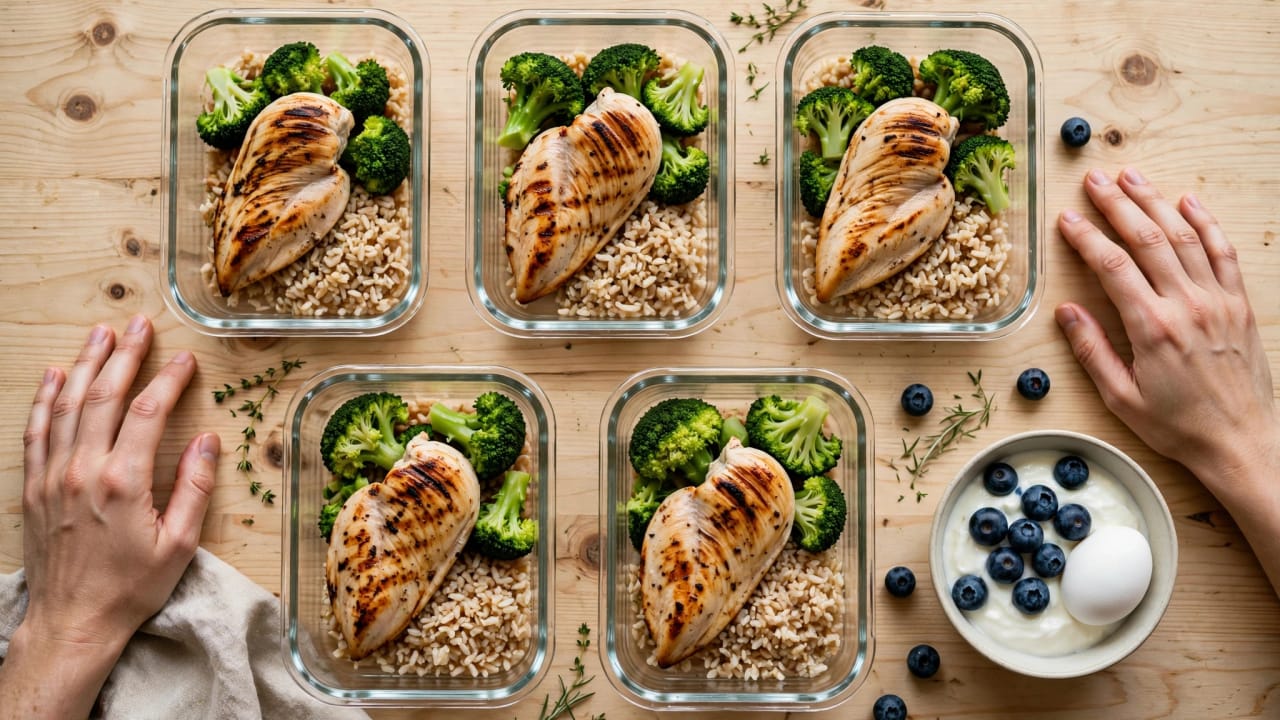
- Roast a tray of chicken and a tray of mixed vegetables.
- Cook a large pot of rice or bulgur and boil a few eggs and potatoes.
- Cook a pot of lentil soup that can be portioned and frozen.
- Wash and chop salad vegetables and keep them in a container with a paper towel.
- Portion the snacks into small containers so nobody has to guess.
Prepared food usually stays fresh in the fridge for three to four days. Freeze the rest for later in the week.
Common mistakes with meal plans
- Following it too rigidly. If you are invited to dinner, swap the meal and move on.
- Forgetting liquid calories. Juice, sweet coffee and soft drinks can quietly add 300 calories.
- Not eating enough vegetables. Vegetables add volume and fibre for very few calories.
- Making the plan too restrictive. If you hate the food, you will not last a month.
- Ignoring weekends. Plan a few meals for Saturday and Sunday too, since that is where many plans slip.
Frequently asked questions
Do I have to eat six times a day? No. Three meals with one or two snacks works for most people. Choose the pattern you can keep.
Can I drink coffee? Yes. Black coffee or coffee with a splash of milk adds very few calories. Watch syrups and sugar.
What if I am vegetarian? Replace the meat and fish with eggs, Greek yoghurt, labneh, lentils, chickpeas, tofu and tempeh, and keep the protein target the same.
How long should I follow it? Until you reach your goal, adjusting calories as your weight changes. Then move to maintenance by slowly increasing portions.
What about a cheat meal? A planned flexible meal is fine. Aim to enjoy it without guilt and return to your normal pattern at the next meal.
Build the habit first, then refine the numbers. A plan you can follow imperfectly for six months beats a perfect one you abandon after ten days.
Key takeaways
- A plan works when it matches your calories and protein, not because of special foods.
- Repeat a simple daily structure and rotate proteins, carbs and vegetables.
- Prepare ahead, measure the calorie dense items, and review progress every two or three weeks.