Healthy Dinner Ideas for Weight Loss Under 500 Calories
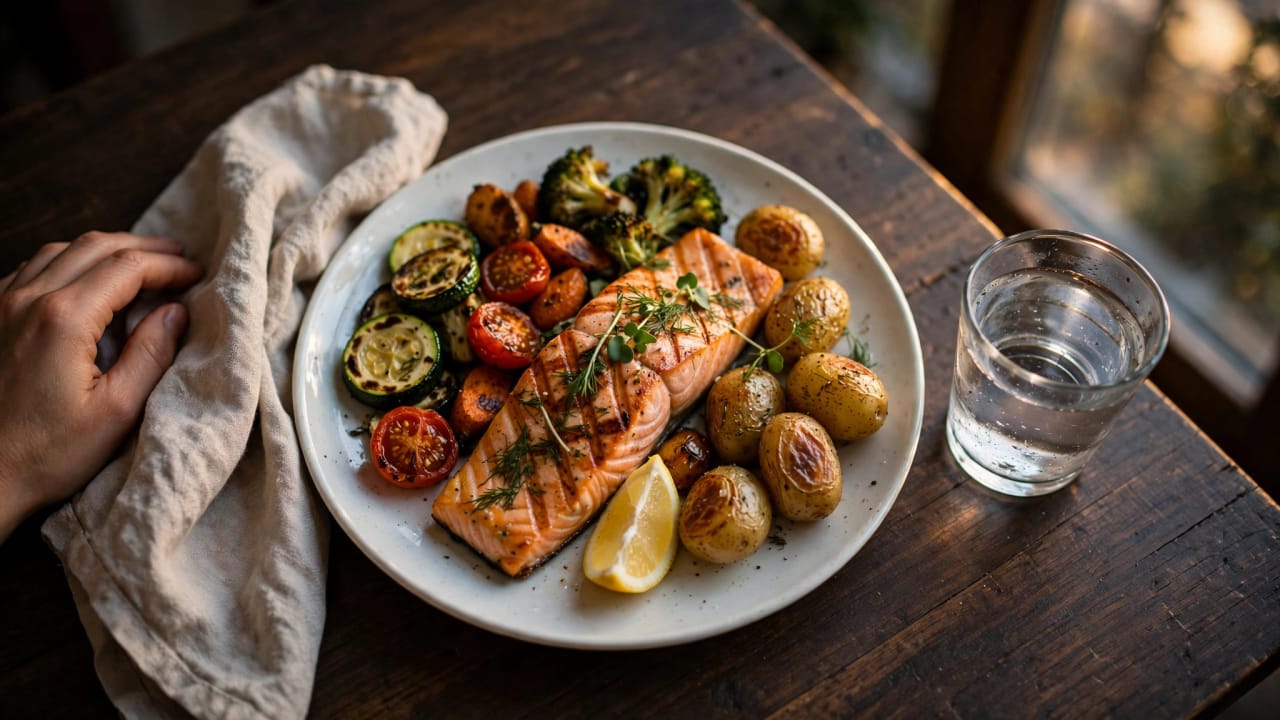
What a good low calorie dinner looks like
Dinner is where many diets fall apart. We are tired, hungry and surrounded by tempting options. A reliable approach is to build the plate around three things: a solid portion of protein, plenty of vegetables, and a smaller portion of carbs or healthy fat. That combination keeps you full for about 400 to 500 calories without feeling like a punishment.
All the numbers below are approximate and based on cooked weights unless stated.
Seven dinners you can actually make on a weeknight
1. Grilled chicken with quinoa and roasted vegetables. About 150 grams of cooked chicken breast, 100 grams of cooked quinoa and a tray of roasted courgette, peppers and onion. Roughly 430 calories and 48 grams of protein.
2. Baked salmon, salad and a few potatoes. About 120 grams of cooked salmon, a big green salad with lemon, and 80 grams of boiled baby potatoes. Roughly 450 calories and 28 grams of protein, with plenty of healthy fats.
3. Garlic shrimp stir fry. 200 grams of shrimp, mixed vegetables, one teaspoon of oil and 100 grams of cooked rice. Roughly 400 calories and 45 grams of protein.
4. Lentil soup with a slice of bread. A generous bowl of red lentil soup with cumin and lemon plus one thin slice of whole grain bread. Roughly 400 calories and 20 grams of protein, and very high in fibre.
5. Chicken kofta with tabbouleh. About 150 grams of lean minced chicken shaped and grilled, with a small portion of bulgur tabbouleh and cucumber yoghurt. Roughly 420 calories and 38 grams of protein.
6. Shakshuka with a half pita. Two eggs poached in a spiced tomato and pepper sauce with a half pita on the side. Roughly 330 calories and 17 grams of protein, which leaves room for a fruit afterwards.
7. Tuna and chickpea salad. One can of tuna in water, 100 grams of chickpeas, cucumber, tomato, parsley, lemon and a teaspoon of olive oil. Roughly 370 calories and 38 grams of protein.
Small tricks that keep dinner light
- Start with a bowl of vegetable soup or a salad. It reduces how much you eat afterwards.
- Measure oil with a spoon, not by pouring. One tablespoon is around 120 calories.
- Choose grilled, baked, steamed or sauteed over deep fried.
- Use herbs, garlic, lemon, chilli and spices for flavour instead of creamy sauces.
- Keep the portion of starchy food about the size of your fist.
- Serve dinner on a smaller plate and put the rest away before you sit down.
Prepare ahead
Cook the protein and a tray of vegetables on a quieter day. A cooked chicken breast, a pot of lentils and some chopped vegetables turn into three different dinners in under ten minutes. Having something ready is usually what stops a takeaway order.
Is eating late a problem?
For weight loss, the total over the whole day matters far more than the clock. If you prefer a later dinner, plan the rest of the day so you do not arrive hungry and over order. Some people sleep better with a lighter evening meal, so notice what works for your body.
These are examples, not a prescription. Adjust portions to match your own calorie and protein target.
Building your own sub 500 calorie dinner
You do not need a recipe for every night. Use this formula and swap the pieces.
- Pick a protein, about 120 to 180 grams cooked. Chicken, fish, shrimp, lean beef, eggs, tofu or lentils.
- Fill half the plate with vegetables. Roasted, grilled, steamed or raw in a salad.
- Add a small carb, about a fist. Rice, potato, bulgur, quinoa, a slice of bread.
- Finish with a thumb of healthy fat or a flavour boost. A teaspoon of olive oil, a few olives, a squeeze of lemon, herbs and spices.
This formula lands between 350 and 500 calories almost every time, and it has plenty of protein and fibre to keep you satisfied.
Flavour ideas for plain ingredients
- Mediterranean: lemon, oregano, garlic and a little olive oil.
- Middle Eastern: cumin, paprika, sumac, parsley and yoghurt sauce.
- Asian inspired: ginger, garlic, a splash of soy sauce and fresh chilli.
- Smoky: smoked paprika, cumin and a spoonful of tomato paste.
- Fresh herb: a handful of coriander or mint with lime juice.
Good seasoning is what makes a light dinner feel like a real meal instead of a diet.
Five minute side dishes
- A cucumber, tomato and parsley salad with lemon.
- Yoghurt with garlic and mint as a sauce.
- Steamed green beans with a little lemon zest.
- A quick slaw of cabbage and carrot with vinegar.
- Roasted chickpeas for a crunchy topping.
Mistakes that push dinner over budget
- Pouring oil freely. A generous pour can add 250 calories without you noticing.
- Extra bread and rice. Serve the carb first, then stop.
- Creamy sauces. Swap them for a yoghurt or tomato based sauce.
- Eating straight from the pot. Plate your portion and put the rest away.
- Drinking calories. Fizzy drinks and juices add up, so choose water, sparkling water or unsweetened tea.
Frequently asked questions
Is 500 calories too little for dinner? For many people trying to lose weight, a 400 to 500 calorie dinner fits easily into a daily target of 1,500 to 2,000 calories. If you are very active, you may need more, so scale the portions.
Can I have dessert? Yes, if it fits your day. A piece of fruit, yoghurt or a few squares of dark chocolate is usually easy to include.
What if I get hungry again later? Increase the protein and vegetables at dinner first. A cup of herbal tea or a small portion of yoghurt can help, but check that your total daily calories are not too low.
Are leftovers fine? Absolutely. Cook a double portion and turn it into lunch the next day.
Do I need to count calories exactly? Not at first. Using the plate formula consistently can already put you in a reasonable range. Weigh your food occasionally to check your estimates.
If you have a medical condition or follow a special diet, adjust these ideas with your doctor or dietitian.
Key takeaways
- A reliable dinner is protein, plenty of vegetables, and a small portion of carbs or fat.
- Measure oil and sauces, because they hide the most calories.
- Cook once and eat twice so a healthy option is always ready.