Healthy Cooking: 12 Easy Swaps That Cut Calories Without Losing Flavor
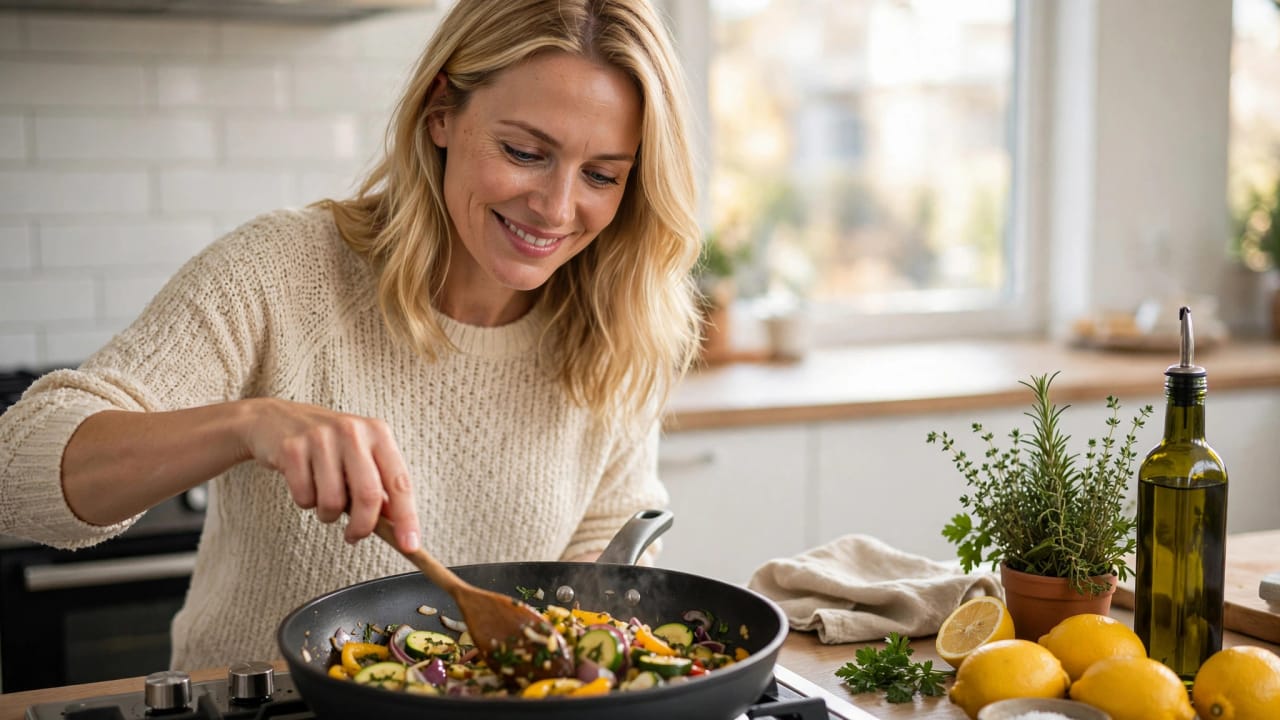
Healthy cooking is mostly small decisions
You do not need special ingredients or a cooking course to make meals lighter. Most of the calories in a home cooked dish come from a handful of choices: how much oil goes in the pan, what kind of sauce is used, and how large the portion is. Change those and the same dish can drop by a few hundred calories.
Here are twelve swaps that work in almost any kitchen.
The swaps
1. Bake or air fry instead of deep frying. Chicken, potatoes and falafel style bites get crisp in a hot oven or an air fryer with a teaspoon of oil instead of a litre.
2. Measure the oil. One tablespoon of oil is about 120 calories, and a quick glug can easily be three. A spoon or a spray bottle keeps it honest.
3. Use a good non stick pan. You need far less fat to stop food from sticking.
4. Saute in a splash of stock or water. Onions, garlic and vegetables soften nicely in a little liquid first, then finish with a touch of oil for flavour.
5. Swap cream for Greek yoghurt. Stirred in at the end, off the heat, it gives a creamy finish in stews, dips and sauces. Do not boil it or it can split.
6. Replace mayonnaise with yoghurt and mustard. It works for chicken salad, tuna salad and coleslaw.
7. Bulk up with vegetables. Grated courgette in meatballs, cauliflower rice mixed with regular rice, mushrooms blended into mince. You eat the same volume for fewer calories.
8. Choose leaner cuts and trim the visible fat. Chicken breast, lean mince, fish and the tenderloin cuts have much less fat than ribs or skin on thighs. Removing the skin saves a surprising amount.
9. Build flavour with herbs, spices and acid. Lemon juice, vinegar, garlic, cumin, paprika, fresh coriander and chilli make food taste exciting without adding calories.
10. Use whole grains more often. Brown rice, bulgur, whole wheat bread and oats keep you fuller for longer.
11. Read the sauce label. Ketchup, barbecue sauce, sweet chilli and many ready made marinades carry a lot of sugar. A homemade mix of tomato paste, garlic and spices is lighter.
12. Cook once, eat twice. Make a bigger batch and portion it out. Having a ready meal in the fridge is the best defence against fast food.
Do not forget the portion
Healthy food can still be too much food. Nuts, olive oil, avocado and cheese are good for you, but they are very calorie dense. A thumb sized piece of cheese or a small handful of nuts is a serving, not a bowl.
A quick example
Take a standard creamy chicken pasta. Swap the cream for yoghurt, halve the pasta and add double the vegetables, cook the chicken in a non stick pan with a spray of oil. You can easily bring a 900 calorie plate down to around 550 and it still tastes like comfort food.
Keep the enjoyment
The goal is not to eat bland food. If a dish does not taste good you will not repeat it. Keep the parts that make a meal enjoyable, and cut the parts that only add calories quietly.
Kitchen tools that make light cooking easier
You do not need an expensive kitchen, but a few tools help a lot.
- A good non stick pan. Cooks with very little oil.
- An oven tray with a rack. Lets fat drip away from chicken and fish.
- An air fryer. Gives a crisp finish with a spoonful of oil.
- A kitchen scale. Makes portions and recipes accurate.
- A measuring spoon set. Keeps oil and sauces honest.
- A steamer basket. Cooks vegetables and fish without any fat.
- A blender or hand blender. Turns roasted vegetables into creamy soups without cream.
Healthier cooking methods ranked
From lightest to heaviest in added fat:
- Steaming and poaching.
- Boiling and simmering in broth.
- Grilling and broiling.
- Baking and roasting with a small amount of oil.
- Sauteing and pan frying with measured oil.
- Deep frying.
A good rule is to use the first five for most meals and keep deep frying for a rare treat.
Fixing four popular dishes
Creamy chicken pasta. Use half the pasta, double the vegetables, replace cream with yoghurt stirred in off the heat, and cook the chicken in a non stick pan.
Fried rice. Use cooked and cooled rice, a teaspoon of oil, plenty of vegetables and an egg or two, with soy sauce used sparingly because it is salty.
Burgers. Use lean mince, add grated courgette or finely chopped mushrooms to keep them juicy, grill instead of frying, and serve in a wholemeal bun with salad.
Mashed potatoes. Mash with a little stock and a spoon of yoghurt instead of butter and cream, and add roasted garlic for flavour.
Smart pantry habits
- Keep tinned tomatoes, beans and lentils for quick, healthy meals.
- Store frozen vegetables so you always have something ready.
- Buy plain yoghurt, not flavoured, and add your own fruit.
- Choose tinned fish in water or olive oil and drain it well.
- Keep fresh herbs, lemons and garlic on hand because they transform simple food.
Frequently asked questions
Is olive oil healthy even though it has calories? Yes. It is a healthy fat, but it is still about 120 calories per tablespoon, so measure it.
Do I need to avoid all fat? No. Some fat is essential for hormones and absorbing vitamins. The goal is to measure it rather than pour it.
Is air frying really healthier? It can reduce fat by a large amount compared with deep frying, because very little oil is used.
Does cooking destroy nutrients? Some vitamins are lost with long boiling. Steaming, roasting and quick sauteing keep more. Using the cooking water in soups helps too.
How can I make healthy food taste better? Season boldly. Salt in sensible amounts, acid like lemon or vinegar, herbs, spices and a little heat can make simple ingredients taste excellent.
Start by changing one habit this week, such as measuring your oil, and add another next week. Small repeated changes beat a complete kitchen overhaul.
Key takeaways
- Most calories in home cooking come from oil, sauces and portion size, so change those first.
- Use flavour from herbs, spices and acid instead of fat and sugar.
- Change one habit at a time, and keep dishes tasty so you repeat them.
Quick checklist for your next meal
- Measure the oil with a spoon.
- Fill half the pan or tray with vegetables.
- Swap one creamy ingredient for yoghurt.
- Taste and add lemon, herbs or spice before reaching for salt or sauce.