Mediterranean Diet for Beginners: Food List, Meal Ideas, and What the Evidence Says
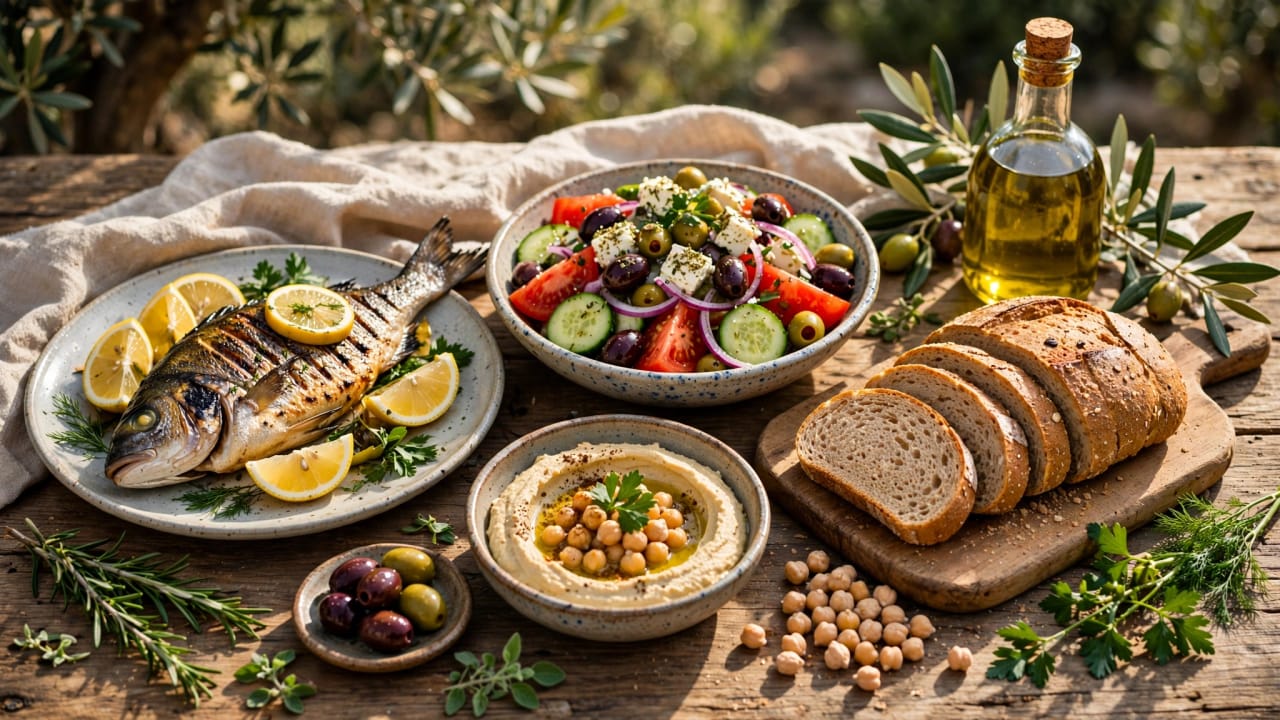
What is the Mediterranean diet?
It is less a strict diet and more a pattern of eating based on the traditional foods of countries around the Mediterranean Sea, such as Greece, Italy, Spain, Lebanon and Morocco. It has topped many expert rankings of healthy diets for years, and it is one of the most studied eating patterns in the world.
What the evidence says
The best known research is the PREDIMED trial in Spain, which followed thousands of adults at high heart risk. People who followed a Mediterranean pattern supplemented with extra virgin olive oil or nuts had roughly 30 percent fewer major cardiovascular events than those on a low fat advice diet. Other studies link this way of eating with better blood sugar control, lower blood pressure and a healthier body weight over time.
It is worth being honest about one thing. The Mediterranean diet is not automatically a weight loss diet. Olive oil, nuts and bread are healthy, but they carry calories. For fat loss you still need a modest calorie deficit. What the diet does well is make a deficit easier to live with, because the food is filling and tasty.
The food list
Eat most days: - Vegetables of every colour, with a large salad or cooked vegetables at lunch and dinner. - Fruit, fresh and in season. - Whole grains such as bulgur, whole wheat bread, oats and brown rice. - Legumes: lentils, chickpeas, fava beans and white beans. - Extra virgin olive oil as the main cooking fat. - Nuts and seeds, a small handful a day. - Herbs and spices: parsley, mint, oregano, za'atar, cumin.
Eat a few times a week: - Fish and seafood, ideally twice a week, especially oily fish like sardines and salmon. - Eggs and poultry. - Yoghurt, labneh and cheese in moderate portions.
Eat only now and then: - Red meat, a few times a month. - Sweets, pastries and sugary drinks. - Processed meats and refined white bread.
A simple day on the plate
- Breakfast: Plain yoghurt with fruit and a few walnuts, or whole grain toast with eggs and tomato.
- Lunch: Lentil soup and a big salad of tomato, cucumber, parsley and olives with olive oil and lemon.
- Snack: An orange and a few almonds.
- Dinner: Grilled fish with roasted vegetables and a small portion of bulgur.
How to start without overhauling everything
- Swap butter and cream based cooking for olive oil.
- Add one legume meal a week and build up from there.
- Eat fish twice a week, tinned sardines and tuna included.
- Make vegetables the biggest part of the plate.
- Choose fruit for dessert most days.
- Slow down and eat with other people when you can. Eating habits are part of the pattern, not only the ingredients.
Is it expensive?
It does not have to be. Lentils, chickpeas, seasonal vegetables, oats, eggs and tinned fish are some of the cheapest foods you can buy. Good olive oil is the one item worth spending on.
Watch the portions
A tablespoon of olive oil is around 120 calories, and a handful of nuts is easily 180. Measure them at first, especially if your goal is to lose weight.
If you have a medical condition or an allergy, adapt the plan with your doctor, for example when it comes to nuts or fish.
A seven day Mediterranean sample
This is a flexible outline, not a strict menu. Portions depend on your own calorie needs.
- Day 1: Greek yoghurt with berries and walnuts. Lentil soup and salad. Grilled fish with roasted vegetables and bulgur.
- Day 2: Whole grain toast with tomato, olive oil and egg. Chickpea and cucumber salad. Chicken with courgette and a small portion of rice.
- Day 3: Oats with apple and cinnamon. Tuna and white bean salad. Vegetable stew with a slice of whole grain bread.
- Day 4: Labneh with cucumber and whole grain bread. Hummus plate with vegetables. Baked salmon with greens and potatoes.
- Day 5: Fruit and yoghurt. Falafel baked in the oven with salad. Shrimp with tomato and garlic.
- Day 6: Egg and vegetable omelette. Fattoush with grilled chicken. Lentils with rice and a yoghurt side.
- Day 7: Pancakes made from oats and banana. A big family lunch of grilled fish, salads and legumes. A light dinner of fruit and nuts.
Cooking basics
The Mediterranean style is built on simple techniques.
- Roast vegetables with olive oil, salt and herbs until caramelised.
- Make a tomato base by slowly cooking tomatoes with onion and garlic, then use it for stews, eggs and legumes.
- Dress salads with lemon juice, olive oil and a pinch of salt.
- Grill fish whole or in fillets with lemon and herbs.
- Build meals around legumes such as lentils, chickpeas and beans.
A budget friendly shopping list
- Dried lentils, chickpeas and beans.
- Seasonal vegetables and fruit.
- Whole grain bread, bulgur and oats.
- Eggs and plain yoghurt.
- Tinned sardines, tuna and tomatoes.
- Olive oil, lemons, garlic and dried herbs.
Common mistakes
- Pouring too much olive oil. It is healthy but calorie dense.
- Eating huge bowls of pasta and bread. The traditional pattern uses moderate portions of grains.
- Thinking any Mediterranean restaurant dish is healthy. Fried appetisers and creamy sauces are not the core of the pattern.
- Forgetting legumes and vegetables. They are the foundation, not a side.
- Ignoring activity. Walking, social meals and unhurried eating are part of the traditional way of life.
Frequently asked questions
Is the Mediterranean diet good for weight loss? It can be, as long as you manage portions and total calories. Its high fibre and filling foods make a calorie deficit easier to live with.
Is wine part of it? Traditionally, a small glass of wine with meals is included in some regions, but it is optional and not recommended for everyone. You do not need alcohol to benefit from the pattern.
Can I follow it if I am vegetarian? Yes. The diet is already rich in plant foods. Use eggs, dairy, legumes, nuts and whole grains for protein.
Is it good for people with diabetes? The emphasis on fibre, legumes and healthy fats suits many people, but you should work with your doctor on carbohydrate portions.
Do I have to eat fish twice a week? It is a guide. If you do not eat fish, you may talk to a professional about omega 3 sources such as walnuts, flaxseeds or supplements.
How soon will I notice changes? Many people notice better digestion and energy within a few weeks. Health markers such as cholesterol and blood pressure change over months.
If you have allergies or a medical condition, adapt the pattern with your doctor. The key is to enjoy real food, mostly plants, in a way that you can keep for life.
Key takeaways
- The Mediterranean diet is a pattern of mostly plants, olive oil, fish and legumes, supported by strong heart health research.
- It is not automatically a weight loss plan, so portions and calories still matter.
- Start with small changes such as swapping fats for olive oil and adding a legume meal each week.