Whey Protein: Concentrate vs Isolate vs Hydrolysate, How to Choose
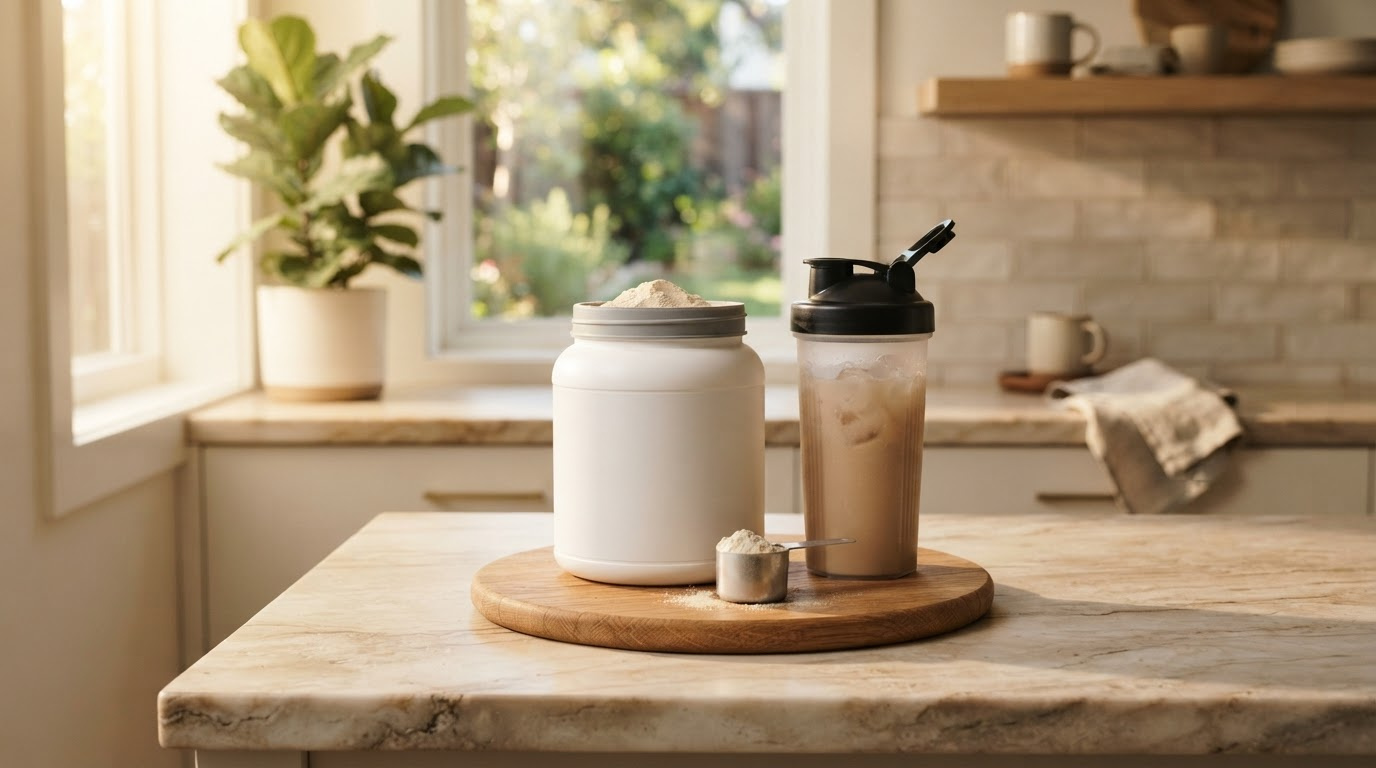
Concentrate is the best value for most people, isolate suits lactose sensitivity, and hydrolysate is rarely worth the price. All three build muscle equally well.
What is whey protein?
When milk is turned into cheese, it separates into solid curds and a thin yellowish liquid. That liquid is whey. Milk protein is roughly 80 percent casein and 20 percent whey, and the whey fraction is rich in the essential amino acids, especially leucine, which helps trigger muscle growth. After filtering and drying, the liquid becomes the powder you see in tubs.
Whey is digested quickly. Amino acids from a serving reach your blood within an hour or so, which makes it a convenient protein for after training or whenever you need protein fast. It also scores at the top of protein quality scales, because it supplies every essential amino acid in good amounts.
The three types of whey
The difference between whey types comes from how much processing the protein has had.
Whey protein concentrate (WPC)
Concentrate is the least processed form. Depending on the product, it contains about 70 to 80 percent protein by weight, with the rest made up of some lactose (milk sugar), a little fat and minerals. It usually tastes the creamiest and costs the least.
Whey protein isolate (WPI)
Isolate goes through extra filtering to remove most of the fat and lactose. It typically contains 90 percent protein or more. A serving has fewer calories and carbohydrates than concentrate, and very little lactose, which many people with lactose sensitivity tolerate better. It costs more per kilogram.
Whey protein hydrolysate (WPH)
Hydrolysate is whey whose protein chains have been partly broken into smaller pieces using enzymes. The idea is faster digestion. It is the most expensive form and often tastes more bitter. Evidence that it builds more muscle than isolate or concentrate is weak, although a few studies suggest faster recovery after very damaging exercise.
Concentrate vs isolate vs hydrolysate: quick comparison
- Protein content. Concentrate is about 70 to 80 percent. Isolate is 90 percent or more. Hydrolysate is similar to isolate.
- Lactose. Concentrate has the most. Isolate and hydrolysate have very little.
- Digestion speed. Hydrolysate is fastest, isolate next, concentrate slightly slower, but the real world difference is small.
- Taste. Concentrate is usually creamiest. Hydrolysate is usually the most bitter.
- Price. Concentrate is cheapest, hydrolysate most expensive.
- Muscle building. Equal when the amount of protein is the same.
Which one should you buy?
Choose by your own situation rather than by the label that sounds most advanced.
- Most people: choose concentrate. It gives the most protein per dollar and works as well as the others for building muscle. If you digest dairy well, there is no reason to pay extra.
- Lactose sensitive or bloating after shakes: choose isolate. The low lactose content often makes the difference. If you have a true milk allergy, none of the whey forms are safe, because they all come from milk. Try a plant protein instead and see whey vs plant based protein powder.
- Cutting calories hard: isolate can help. A serving of isolate has slightly fewer calories and carbohydrates, which can be useful when your allowance is small.
- Hydrolysate: only if budget is not a concern or your doctor has recommended it for digestion reasons.
How much whey protein do you need?
A common serving is 25 to 30 grams of powder, which gives about 20 to 25 grams of protein depending on the product. Research suggests that around 0.3 to 0.4 grams of protein per kilogram of body weight per meal is enough to maximise the muscle building response for most adults, and many people use one or two scoops a day to fill the gap in their diet.
Remember that whey is a supplement, not a requirement. Your total daily protein is what matters. Many active adults aim for 1.6 to 2.2 grams per kilogram of body weight. Our guide to high protein foods and how much they contain shows how far food alone can take you.
When to take whey protein
- After training. A convenient time, though the so called anabolic window is much wider than once believed.
- Between meals. A shake can lift a lunch that was low in protein.
- At breakfast. Mixed into oats or a smoothie, it makes a quick high protein start.
- Before bed. Whey works, but slower digesting protein can be a better fit. Read casein vs whey.
For timing around workouts, see nutrient timing for faster recovery.
Does whey protein damage the kidneys?
For healthy people, no. A large systematic review of randomised trials found no harm to kidney function in healthy adults eating higher protein diets. The concern applies to people who already have kidney disease, who should only change their protein intake under medical supervision. If you have any kidney or liver condition, ask your doctor first.
Other common worries
- Acne. Some people notice more breakouts when they use whey, and a few small reports link dairy proteins to acne. The evidence is mixed. If your skin changes, try stopping for a few weeks or switching to a plant protein.
- Bloating and gas. Often caused by lactose, sweeteners or drinking the shake too fast. Try isolate, a smaller scoop, or mixing with water.
- Weight gain. Whey itself does not cause fat gain. Extra calories do. A scoop adds about 100 to 130 calories.
- Hair loss. There is no good evidence that whey protein causes hair loss.
How to read a whey label
- Check the protein per serving and the serving size. A 35 gram scoop with 24 grams of protein is a 69 percent protein product. Compare products by protein per 100 grams.
- Look at the first ingredient. It should say whey protein concentrate, isolate or hydrolysate, not a "blend" that starts with cheaper proteins.
- Beware of amino spiking. Some brands add cheap amino acids like glycine or taurine so the protein number looks higher. A transparent label lists each amino acid.
- Prefer third party testing. It lowers the risk of contaminants. See understanding supplement quality and third party testing.
- Check the sweeteners and flavour. A shorter ingredient list is usually better.
Five easy ways to use whey in cooking
- Mix a scoop into plain Greek yogurt with berries.
- Stir it into cooked oats after taking them off the heat, to avoid clumps.
- Blend it with banana, milk and peanut butter for a quick shake.
- Add it to pancake batter with oats and an egg.
- Make protein ice cream by freezing a thick shake in a tray.
For more ideas see high protein breakfast ideas for muscle gain.
Whey vs other supplements
If you are choosing between supplements, remember the order of importance. Whole food protein first. Then, if needed, whey. Creatine is also well supported but does a different job. See creatine vs protein powder and the best supplements for beginners.
Frequently asked questions
Is isolate better than concentrate? It is higher in protein and lower in lactose, but for muscle building they work equally well. Choose isolate for digestion or calorie reasons, not for extra muscle.
Can I take whey on rest days? Yes, if it helps you reach your daily protein target. Muscle repair continues on rest days.
Can I mix whey with milk? Yes. Milk adds protein, calories and creaminess. Use water if you want fewer calories.
How long does an opened tub last? Usually until the printed date if kept sealed, dry and cool. Throw it away if it smells sour or looks clumped and damp.
Is whey protein safe for teenagers? Food first is better for young people. Speak with a doctor or dietitian before a teenager uses supplements regularly.
This article is general information and not medical advice. If you have a medical condition, an allergy or take medicine, speak with your doctor or a registered dietitian.
How FiTPLATE turns protein into a plan
Buying a tub is easy. Knowing how much protein you need is the hard part.
- A personal protein target. Tell FiTPLATE your body, goal and activity, and it calculates your daily calories and protein.
- A log that counts your shakes. Search, scan a barcode or use quick add, so every scoop and every meal counts toward the day.
- Meals that fill the gap. If your log shows you are 30 grams short, ask for a meal built around that target, or browse protein rich dishes in the Sports Kitchen. Try this grilled chicken with roasted broccoli, which has about 75 grams of protein.
- A weekly plan and shopping list. Plan the week once and send the ingredients to your shopping list.
Start your free trial and find your protein target
References
- Devries MC et al. Changes in kidney function do not differ between healthy adults consuming higher versus lower protein diets: a systematic review and meta analysis. Journal of Nutrition, 2018.
- Jäger R et al. International Society of Sports Nutrition Position Stand: protein and exercise. Journal of the International Society of Sports Nutrition, 2017.
- Morton RW et al. A systematic review, meta analysis and meta regression of the effect of protein supplementation on resistance training induced gains in muscle mass and strength in healthy adults. British Journal of Sports Medicine, 2018.