Understanding Food Portions Without a Scale
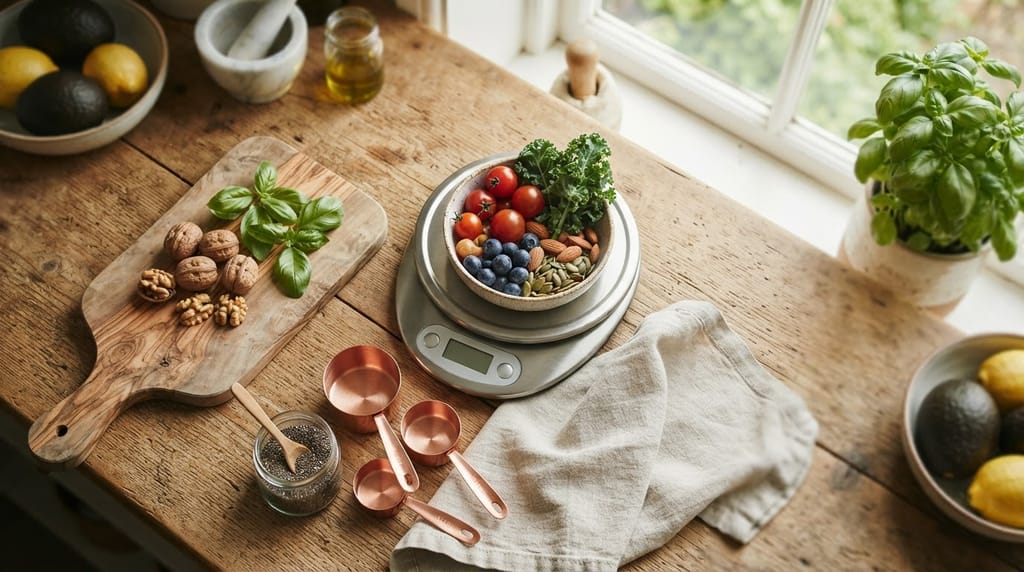
Why We Need an Alternative to the Scale
A digital kitchen scale is accurate, but it isn't always practical—at restaurants, while traveling, or during family meals. Fortunately, nutrition research shows that the "hand method" for estimating portions is reliable enough for most everyday goals like weight management or macronutrient balance, without needing gram-level precision. The goal isn't athletic-level accuracy, but long-term consistency.
The Hand Method: A Quick, Personal Reference
The hand works well as a reference because it roughly scales with overall body size—a larger person tends to have a larger hand, making it a reasonably proportional guide:
- Palm (without fingers): a protein portion (meat, chicken, fish, tofu) of roughly 85-115 grams.
- Full fist: a portion of vegetables or fruit, or cooked starchy carbohydrates like rice and pasta.
- Cupped hand (half a fist): a portion of nuts, seeds, or nut butter.
- Full thumb (base to tip): a portion of added fats such as olive oil or butter.
These estimates are approximate, not laboratory-precise, but they're sufficient for most healthy people who want to track their eating without obsessing over exact numbers.
Common Household Objects for Visual Comparison
You can also use familiar objects to estimate portion size by eye:
- A tennis ball ≈ a medium piece of fruit, or about half a cup of cooked rice.
- A matchbox or a large die ≈ 30 grams of cheese.
- The surface of your palm (not thickness) ≈ a visual guide for a portion of fish or meat.
- A standard teacup ≈ about half a measuring cup (120 ml), useful for estimating cooked grains or yogurt.
These comparisons are especially handy when eating out, where precise measuring tools aren't available.
Why Perfect Precision Isn't Always Necessary
The body responds to ranges, not rigid numbers. Research in behavioral nutrition shows that people who rely on reasonable visual estimates—while also paying attention to hunger and fullness cues—often maintain their eating habits longer than those who depend solely on weighing every single item. Flexibility reduces the mental fatigue associated with food tracking, which is an important factor in long-term consistency.
When Is Precise Weighing Useful?
In certain situations, using a scale for a limited period is preferable: when first learning portion sizes, or when following a specific eating plan prescribed by a dietitian or physician for a health condition such as diabetes or kidney disease, where precision is part of the treatment itself. In these cases, follow your healthcare provider's instructions, since this article offers general educational information only and does not replace personalized medical or dietary advice.
Practical Takeaway
Learning to estimate portions using your hand and household objects is a lifelong skill that helps you make reasonable food choices anywhere. Start by comparing your estimates to a scale for a few weeks to train your eye, then gradually shift toward relying on visual judgment in daily life.